27 6 月 <br />
<b>Warning</b>:  Undefined variable $i in <b>/www/wwwroot/wordpress/wp-content/themes/land-excavator-pro/land-excavator-pro/template-parts/post/post-content.php</b> on line <b>57</b><br />
How to Select X-Rings | Professional X-Ring Sizing Guide
0 Comment
Choosing the proper X-Ring (star-shaped quad ring) for your sealing application follows these professional selection criteria:

1. Static Seals & Reciprocating Linear Motion

Bore-mounted (housing) seals
The inner diameter of the X-Ring should match the groove dimension, or be roughly 2% smaller than the outer diameter of the groove. The pre-compression creates stable pre-tension and effectively prevents X-Ring twisting during operation.
Shaft-mounted seals
The X-Ring inner diameter needs to equal or slightly exceed the shaft outer diameter by 0.2–0.3 mm, or 1% larger than the shaft OD. This design simplifies installation and extends the service life of the quad ring.

2. Rotary Shaft Sealing

For rotary applications, select an X-Ring whose inner diameter is 2%–5% larger than the shaft diameter.
Rubber X-Rings generate friction heat while rotating, which causes elastomer shrinkage. The enlarged inner diameter maintains proper lubrication and ensures reliable long-term sealing performance.

3. X-Ring Material & Standard Specifications

The most common material is NBR 70 Shore A (N70 nitrile rubber). You can also adopt other elastomer grades that match standard O-Ring material options.
X-Ring dimensions fully conform to universal O-Ring size standards.
LEARN MORE
27 6 月 <br />
<b>Warning</b>:  Undefined variable $i in <b>/www/wwwroot/wordpress/wp-content/themes/land-excavator-pro/land-excavator-pro/template-parts/post/post-content.php</b> on line <b>57</b><br />
NBR O-Ring Advantages & Disadvantages | Silicone Sealing Mold Manufacturing
0 Comment
When manufacturing silicone seal molds and rubber sealing products, NBR O-rings remain the most widely used sealing element. Let’s break down the main advantages and limitations of nitrile rubber O-rings.

Advantages of NBR O-Rings

  1. NBR O-rings deliver outstanding resistance to water, solvents and mineral oil, plus excellent air tightness for hydraulic and plumbing systems.
  2. Nitrile rubber features great wear resistance and reliable compression set performance under long-term clamping pressure.

Disadvantages of NBR O-Rings

  1. NBR seals cannot work well in polar chemical environments. They degrade quickly when exposed to ozone, ketones and other strong polar media.

About Our Precision Mold Factory

Since establishment, Dongguan Ouning Precision has adhered to the principle of premium quality and customer-oriented service, following ISO quality standards to continuously optimize mold precision. Our mold manufacturing has earned consistent recognition from global buyers.
We are equipped with imported CNC machining centers (Taiwan Dali 1020 / 860), KENT grinders, EDM machines, and Miyano (BNA-42C) CNC lathes from Japan. We also adopt Mitutoyo testing instruments and professional design software including UG, PROE, MASTERCAM and CAD. We provide one-stop service from product development to finished rubber seal mold fabrication.
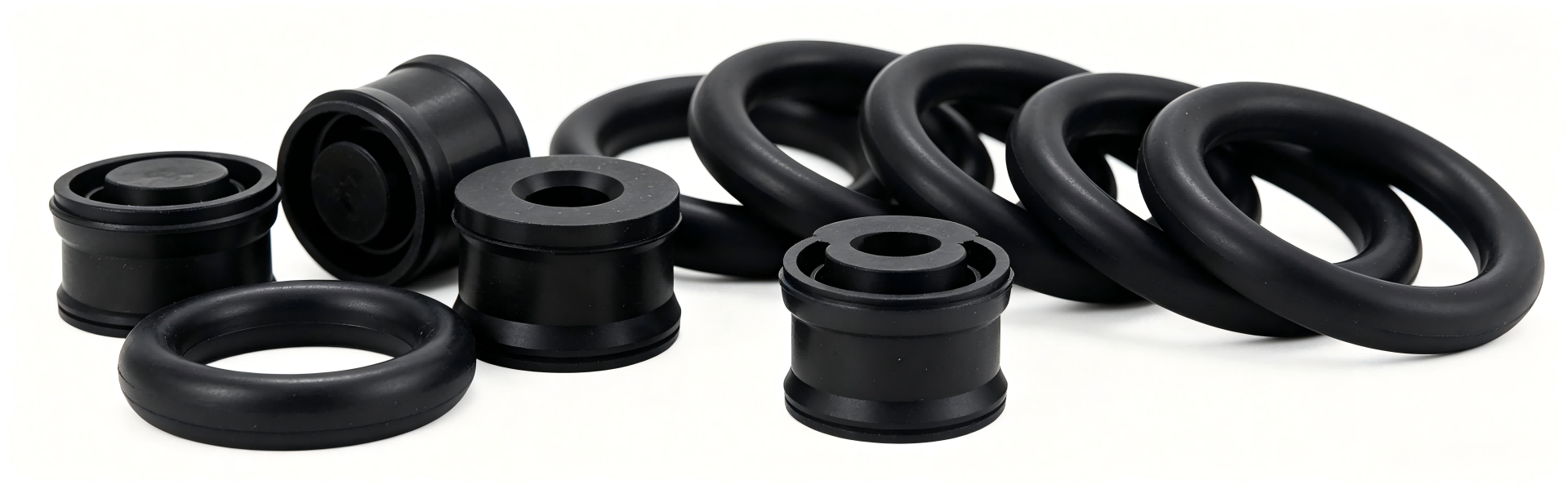
Our core business covers custom molds for 45° X-rings & O-rings, oil shaft seals, valve stem seals, as well as Y-type, U-type, K-type, O-type and X-type high-precision silicone rubber sealing components.

LEARN MORE
27 6 月 <br />
<b>Warning</b>:  Undefined variable $i in <b>/www/wwwroot/wordpress/wp-content/themes/land-excavator-pro/land-excavator-pro/template-parts/post/post-content.php</b> on line <b>57</b><br />
Silicone Rubber Seal Molds: Working Principle of Oil Seals
0 Comment

Working Principle of Rotary Shaft Oil Seals

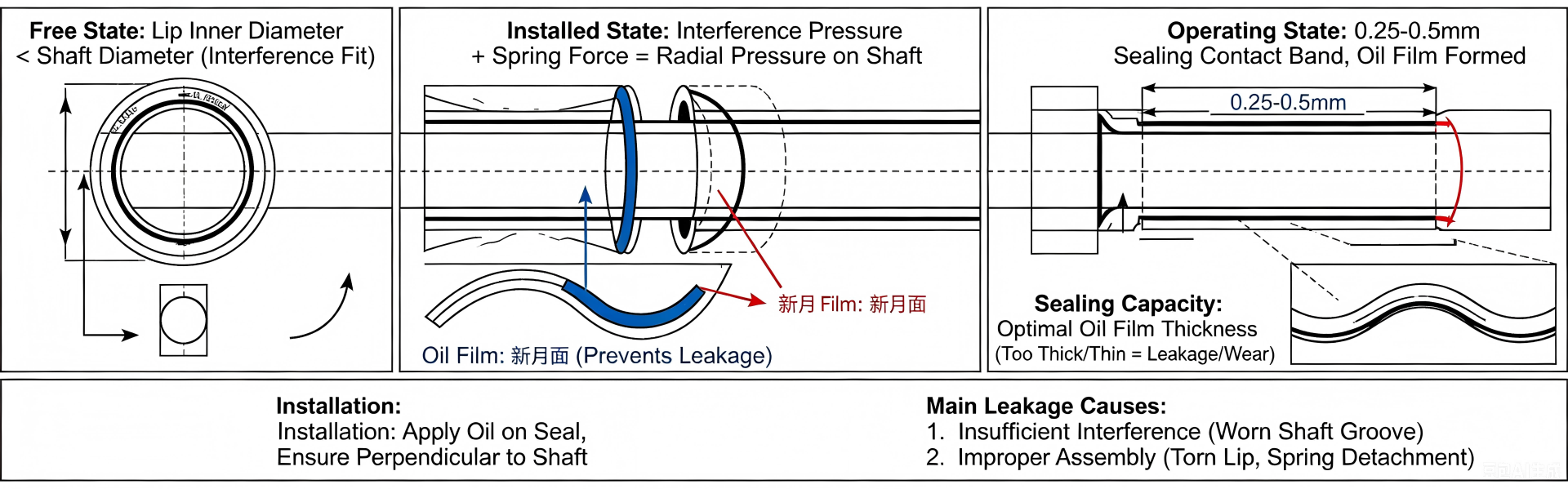
  1. In the free state, the inner diameter of the oil seal lip is smaller than the shaft diameter with a certain interference value.
  2. After installation, the interference pressure of the sealing edge together with the contraction force of the garter spring creates stable radial pressure against the rotating shaft.
  3. During operation, the lip forms a sealed contact band of 0.25~0.5 mm under radial compression. Under lubricant pressure, a thin oil film penetrates between the seal lip and the shaft. Guided by liquid surface tension, a crescent-shaped oil surface forms at the outer edge to block oil leakage and achieve effective sealing.
A precisely controlled oil film exists between the oil seal and shaft, which provides hydrodynamic lubrication. Relying on surface tension, the oil film forms a tight crescent boundary where liquid meets air and stops medium leakage for rotary shaft sealing.
Sealing performance is determined strictly by oil film thickness:
  • Excessively thick film will cause leakage;
  • Too thin film leads to dry friction and abrasion on both shaft and seal;
  • Zero oil film will trigger excessive heat and rapid wear.
For proper installation:
Coat the seal with lubricant and keep the oil seal perpendicular to the shaft centerline. If tilted, the lip will squeeze out all lubricant and suffer premature wear. The optimal running state allows tiny amounts of lubricant to seep out to maintain the ideal thin oil film on the contact surface.

Main Causes of Oil Seal Leakage

Poor sealing is the primary cause of oil leakage. When the shaft has worn grooves, even a brand-new oil seal will fail to seal properly. The root cause is reduced contact pressure and insufficient interference between the seal lip and shaft.
Improper installation is another key factor: torn or flipped sealing lips, and dislodged garter springs will directly result in seal failure.
LEARN MORE
27 6 月 <br />
<b>Warning</b>:  Undefined variable $i in <b>/www/wwwroot/wordpress/wp-content/themes/land-excavator-pro/land-excavator-pro/template-parts/post/post-content.php</b> on line <b>57</b><br />
Silicone Rubber Seal Mold: Common Failure Modes, Causes and Solutions for Rubber Seals
0 Comment
Silicone rubber seals are essential industrial sealing components for mecha guannical and hydraulic equipment. Rubber seal failure often leads to equipment leakage, reduced efficiency and unexpected downtime. This article analyzes the main silicone rubber seal failure modes and root causes from materials, structural design and mold processing, providing professional guidance for rubber seal mold manufacturing, product selection and quality improvement.

Main Failure Modes of Rubber Seals

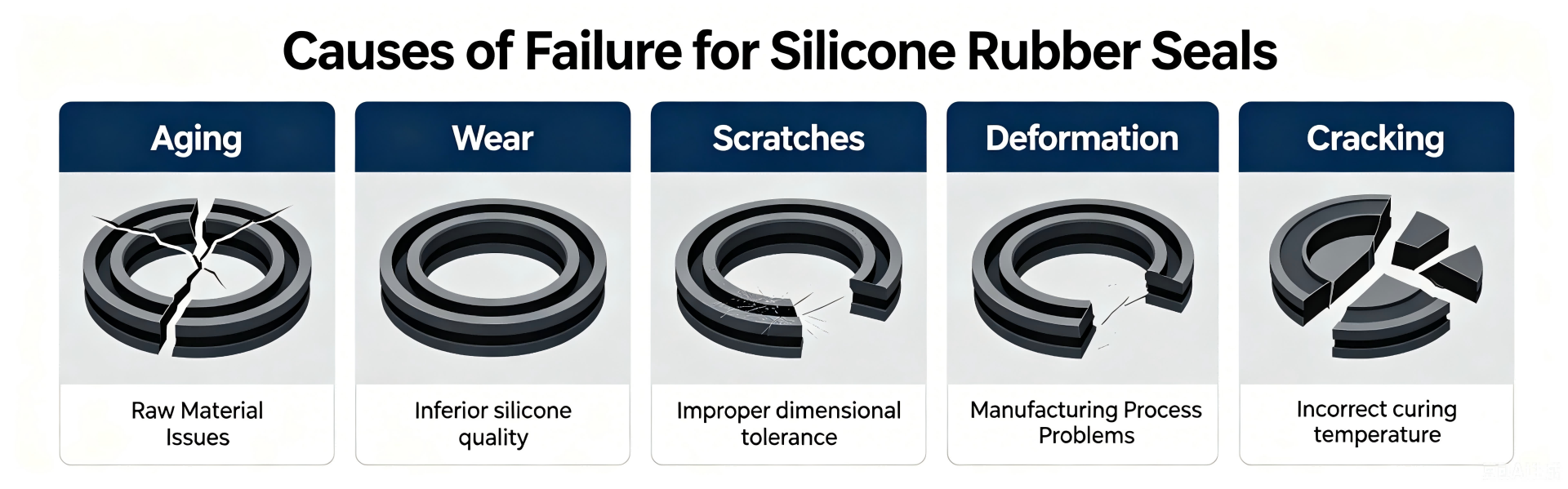
Rubber seals mainly fail in five forms: aging, wear, scratch, permanent deformation and cracking.

Aging Failure

Rubber aging failure is triggered by molecular degradation and excessive cross-linking of rubber polymers under complex working conditions. Typical aging symptoms of silicone rubber seals include surface cracking, hardening, brittleness, stickiness, discoloration, mildew and chalking. This defect will weaken insulation and sealing performance significantly, and different rubber grades present distinct aging failure characteristics.

Wear Failure

Rubber seal wear failure mainly occurs in dynamic sealing structures with frequent reciprocating motion. The friction causes uneven surfaces and continuous material loss of silicone rubber seals, forming tiny sealing gaps and eventually leading to leakage and seal failure.

Scratch, Deformation and Cracking

Surface scratches on rubber seals are mainly caused by improper assembly and hard medium impurities. Long-term static compression produces irreversible permanent deformation, while alternating stress and thermal cycling easily cause body cracking, which are common auxiliary failure modes of silicone rubber sealing parts.

Root Causes of Seal Failure

Raw Material Problems

Improper material selection: Unmatched silicone rubber grades fail to meet operational standards of temperature resistance, pressure resistance and medium resistance, which is a primary cause of rubber seal premature failure in industrial applications.
Poor rubber quality: Impurity contamination in rubber compounding or excessive additives reduces the mechanical properties and aging resistance of raw materials. Inferior rubber formulas directly cause potential silicone seal failure risks.

Structural Design Defects

The sealing capacity of silicone rubber seals relies on reasonable compression deformation. Unreasonable structural design is a key factor leading to frequent rubber seal failure.
Insufficient compression: Mismatched seal section size and oversized mounting grooves cause inadequate pre-compression, resulting in low-pressure medium leakage and sealing failure.
Excessive compression: A common defect in dynamic seal design. Excessive compression squeezes out interfacial lubricants, causing dry friction and accelerated rubber seal wear.
Medium incompatibility: When silicone rubber seals contact incompatible oil, acid, alkali or organic solvents, swelling, bulging and softening occur, completely losing sealing performance.

Mold and Processing Defects

Appearance defects: Unqualifiedrubber seal mold processing causes burrs, flashes and micro cracks on seal surfaces, forming leakage channels after assembly.
Dimensional inaccuracy: Low mold manufacturing precision leads to unqualified seal dimensions and abnormal compression, failing to meet standard sealing design requirements.
Internal defects: Uneven rubber mixing and poor exhaust in vulcanization produce internal bubbles and delamination inside seals, causing cracking and pressure leakage in service.

LEARN MORE
27 6 月 <br />
<b>Warning</b>:  Undefined variable $i in <b>/www/wwwroot/wordpress/wp-content/themes/land-excavator-pro/land-excavator-pro/template-parts/post/post-content.php</b> on line <b>57</b><br />
How to Prevent Aging Failure of Rubber Seals
0 Comment
Rubber seal aging is the most common irreversible failure of silicone rubber seals. It can be effectively avoided through material optimization, structural improvement, standardized processing and scientific application management, greatly extending seal service life and reducing equipment leakage risks.
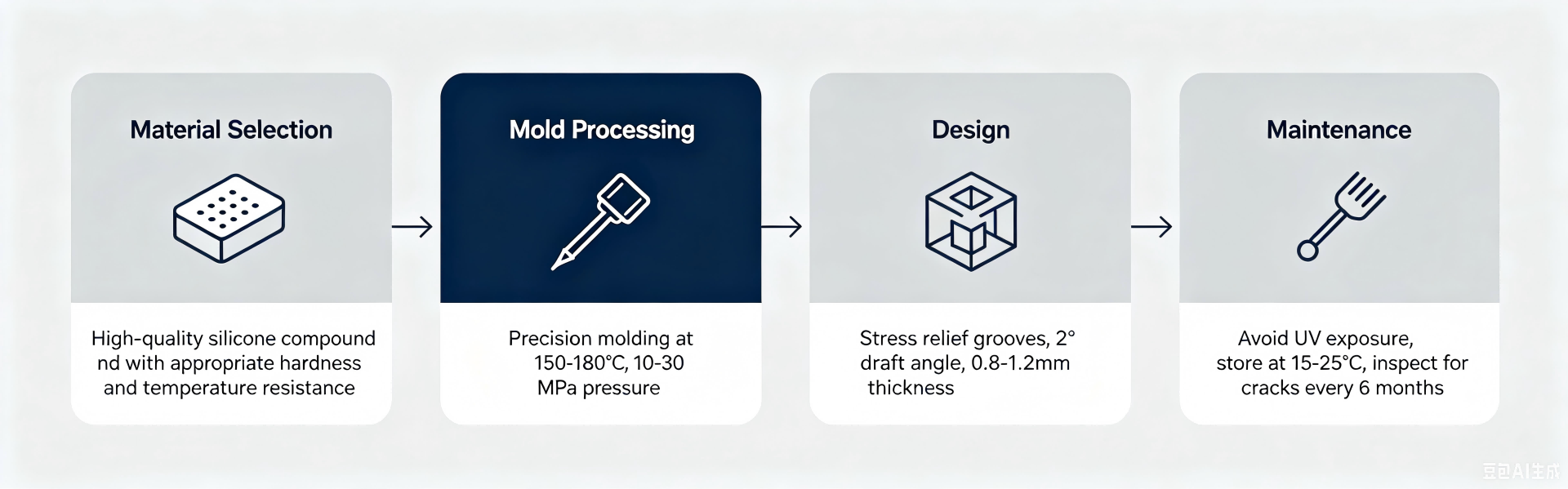
Optimize material selection: Select high-quality silicone rubber materials with excellent aging resistance, ozone resistance and high and low temperature resistance according to actual working conditions. Avoid unqualified rubber formulas and inferior raw materials; use matched vulcanizing agents and additives to improve the molecular stability of rubber products and slow down polymer degradation.
Standardize mold processing technology: Strictly control rubber compounding, uniform mixing and vulcanization exhaust processes to avoid internal defects. High-precision rubber seal mold manufacturing ensures stable product structure and surface finish, preventing premature aging caused by surface cracks and quality defects.
Optimize structural design: Design reasonable seal compression to avoid long-term excessive compression fatigue aging. Ensure good medium compatibility between silicone rubber seals and working media such as oil, acid and alkali to prevent aging and deterioration caused by chemical corrosion.
Standardize application and maintenance: Reduce long-term exposure of seals to high temperature, strong ultraviolet and ozone environments. Regularly inspect and replace aging sealing parts, avoid dry friction operation, and maintain a good lubrication environment for dynamic seals to delay aging failure.

LEARN MORE
27 6 月 <br />
<b>Warning</b>:  Undefined variable $i in <b>/www/wwwroot/wordpress/wp-content/themes/land-excavator-pro/land-excavator-pro/template-parts/post/post-content.php</b> on line <b>57</b><br />
Physical Properties of Silicone Rubber for Molded Sealing Rings
0 Comment

1. High Temperature Resistance

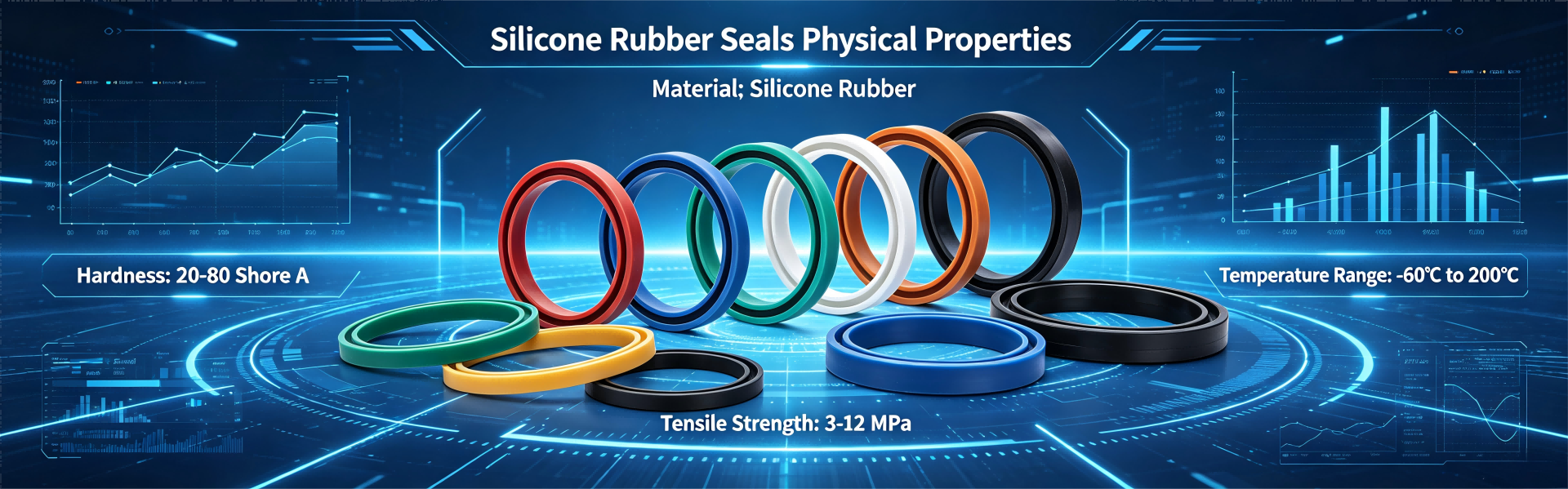
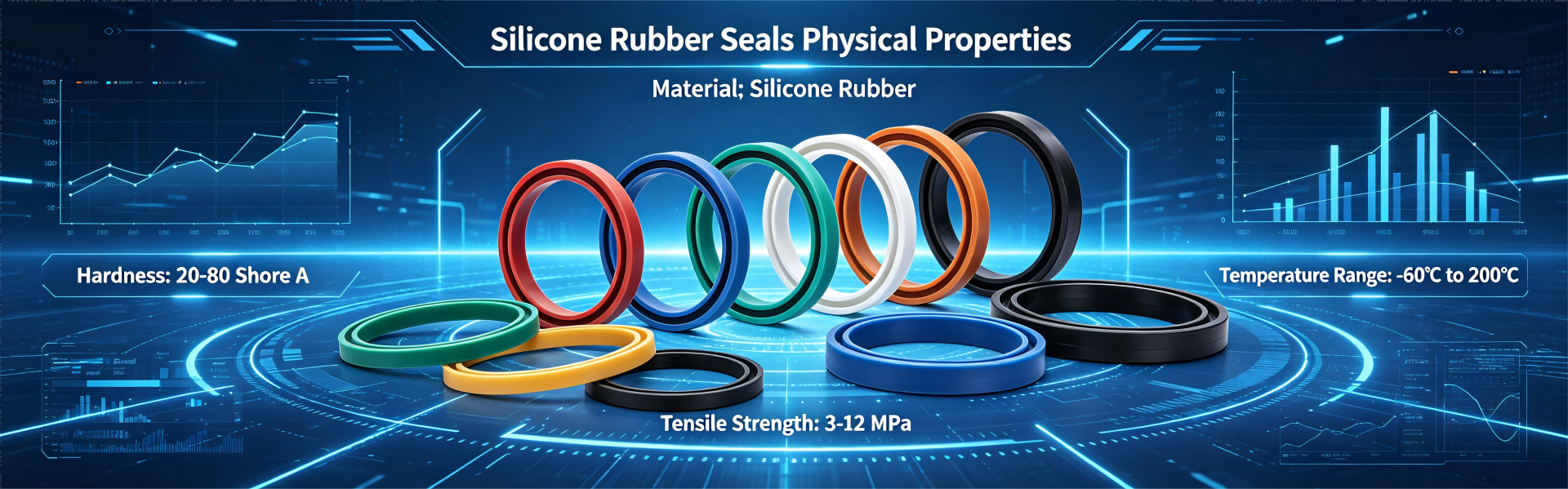
Silicone rubber features outstanding thermal stability. It can serve continuously at 250℃ to 300℃. With special fillers and high-temperature additives, its long-term working temperature can reach 375℃, and it can withstand instantaneous high temperature up to several thousand degrees.
 
Service life reference: 20 years at 120℃, and 5 years at 150℃, with excellent aging resistance.

2. Low-temperature Elasticity

Silicone maintains good flexibility at low temperatures. It normally stays elastic at -50℃ ~ -60℃, far better than natural rubber and other synthetic rubbers that tend to turn brittle in cold conditions.

3. Gas Permeability

Silicone film has excellent air permeability. At room temperature, its permeability to air, nitrogen, oxygen and carbon dioxide is 30–50 times higher than natural rubber.

4. Electrical Insulation Properties

Silicone boasts stable electrical performance. Its dielectric strength, power factor and insulation barely change with temperature and frequency over a wide range.
 
Key electrical indicators:
  • Breakdown voltage: 20~25 kV/mm
  • Dielectric constant: 3~3.2
  • Dielectric loss tangent: 3~3.5×10⁻³
  • Volume resistivity: 1×10¹⁶ Ω·cm
     
    It also has good resistance to corona and electric arcs.

5. Mechanical Properties

  • Hardness: 35~75 Shore A
  • Tensile strength: up to 105 kg/cm²
  • Elongation at break: within 1000%
     
    All parameters can be customized according to product requirements.
     
    While its room-temperature strength is lower than general-purpose rubber, silicone retains stable mechanical performance at 150℃, greatly outperforming ordinary rubber. Its compression set stays between 7%~10% under heat.

6. Weather Resistance

Silicone is resistant to oxygen, ozone and UV radiation. It will not crack after long-term outdoor exposure.

7. Biological Inertness

The material is non-toxic, odorless and tasteless. It also has low surface activity and low moisture absorption.

LEARN MORE
27 6 月 <br />
<b>Warning</b>:  Undefined variable $i in <b>/www/wwwroot/wordpress/wp-content/themes/land-excavator-pro/land-excavator-pro/template-parts/post/post-content.php</b> on line <b>57</b><br />
NBR O-Rings: Advantages, Disadvantages & Compatibility for Rubber Seal Molds
0 Comment

Advantages of Nitrile Rubber (NBR) O-Rings

  1. NBR O-rings deliver excellent resistance to oil, water and non-polar solvents, with reliable air tightness for hydraulic and pneumatic sealing systems.
  2. Nitrile rubber seals offer superior wear resistance and low compression set for long-term repeated sealing.

Disadvantages of Nitrile Rubber (NBR) O-Rings

  1. NBR O-rings are not suitable for environments with ozone, ketones and other polar solvents, which will cause premature cracking and aging.
Dongguan Ouning Precision has always stuck to the principle of "Superior Quality, Premium Service". We strictly follow ISO quality standards to continuously optimize precision rubber mold workmanship, earning consistent recognition from global clients.
Our workshop is equipped with imported Dali CNC machining centers (1020 / 860 models), KENT grinders, EDM machines, Japan Miyano (BNA-42C) CNC lathes, and Mitutoyo precision measuring tools. We use UG, PROE, MASTERCAM and CAD software to complete the whole workflow from product drawing to rubber mold production.
We specialize in high-precision mold manufacturing for 45° X-rings, O-rings, shaft oil seals, valve oil seals, Y-rings, U-rings and K-rings silicone rubber sealing components. 
Visit us at www.ouningsealing.com


LEARN MORE
27 6 月 <br />
<b>Warning</b>:  Undefined variable $i in <b>/www/wwwroot/wordpress/wp-content/themes/land-excavator-pro/land-excavator-pro/template-parts/post/post-content.php</b> on line <b>57</b><br />
What Conditions Are Required for Silicone Rubber Seal Mold Development
0 Comment
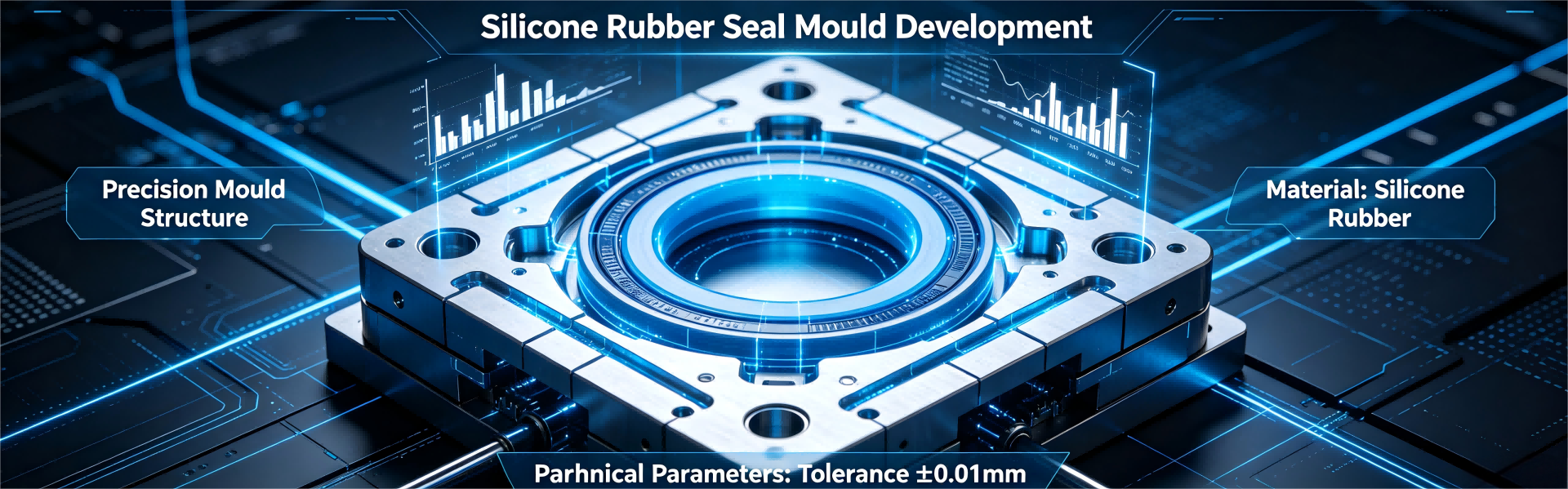
Everyone knows that high-quality silicone rubber sealing rings depend on well-made molds. So what core conditions are required to develop reliable silicone seal molds? Let’s break down the key requirements for mold development.

Key Performance Requirements for Silicone Rubber Seal Molds

1. Wear Resistance

Wear resistance is the core property of mold steel for silicone rubber seals. The hardness of molded silicone parts directly affects mold abrasion loss. Generally speaking, higher hardness of molded products leads to less mold wear and better durability. Besides product hardness, mold wear is also affected by material grade, filler content and product geometry.

2. Strength and Toughness

Mold inserts may suffer sudden brittle fracture during repeated production. For this reason, silicone seal molds must have high tensile strength and good impact toughness to avoid cracking in continuous mass production.

3. Fatigue Fracture Resistance

Silicone molds run continuously under cyclic stress in long-term vulcanization production, which easily causes fatigue cracking. Therefore, mold materials need a balanced combination of strength, toughness and hardness to resist fatigue failure.

4. High-temperature Stability

Silicone rubber molding is carried out under high-temperature vulcanization. High working temperature will reduce the hardness and mechanical strength of mold steel. When developing silicone seal molds, we must select steel with excellent temper resistance to maintain stable performance under sustained high-temperature working conditions.
LEARN MORE
15 6 月 <br />
<b>Warning</b>:  Undefined variable $i in <b>/www/wwwroot/wordpress/wp-content/themes/land-excavator-pro/land-excavator-pro/template-parts/post/post-content.php</b> on line <b>57</b><br />
Future of Excavators: Automation, AI, and Electric Power
0 Comment
Lorem Ipsum is simply dummy text of the printing.
LEARN MORE
15 6 月 <br />
<b>Warning</b>:  Undefined variable $i in <b>/www/wwwroot/wordpress/wp-content/themes/land-excavator-pro/land-excavator-pro/template-parts/post/post-content.php</b> on line <b>57</b><br />
The Role of Excavators in Mining and Heavy Earthmoving
0 Comment
Lorem Ipsum is simply dummy text of the printing.
LEARN MORE